Directory
Find quality copper bisglycinate studies, protocols, and resources — verified sources in one place.
Recommended brands
Copper bisglycinate is sold by dozens of brands. We do not rank them on quality — they are grouped here by dose, low to high, because that is the choice that actually matters. The RDA is 900 mcg/day and the Institute of Medicine sets a tolerable upper intake level of 10 mg/day for adults.
Suits most adults who have a reason to supplement — comfortably above the 900 mcg RDA and well under the 10 mg upper limit.
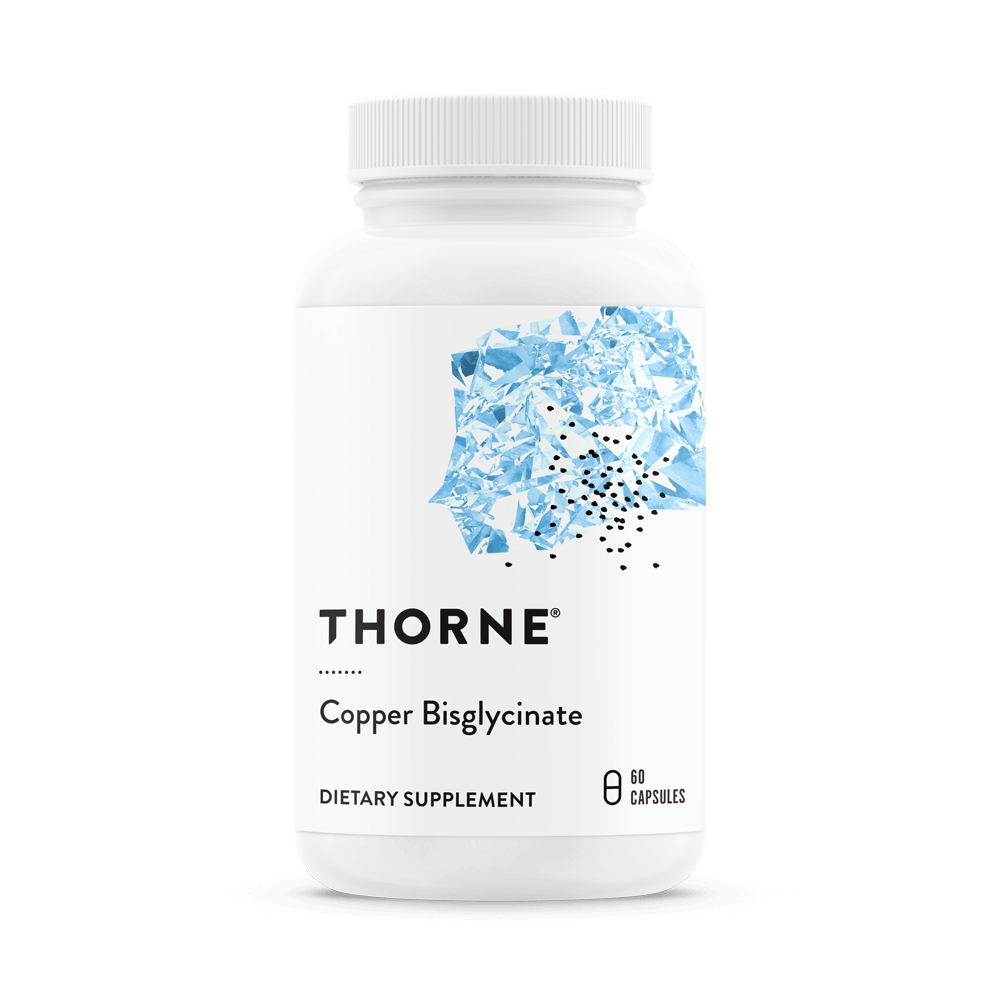
Thorne Copper Bisglycinate
2 mg per capsuleBuilt on the TRAACS® copper bisglycinate chelate — the 1:2 copper-to-glycine form described throughout this guide.
- Widely available standard dose
- Well tolerated, including on an empty stomach
Pure Encapsulations Copper (glycinate)
2 mg per capsuleLabelled “copper glycinate,” which in practice is the same chelate — see glycinate vs bisglycinate.
- Hypoallergenic, vegan capsule
- Commonly stocked by practitioners
Formula IQ — Copper IQ
2 mg per capsuleA high-absorption copper built on the Albion® copper bisglycinate chelate, formulated around mitochondrial energy production and iron metabolism.
- Albion® chelated copper bisglycinate
- Veggie capsule
Approaching the upper limit once dietary copper (roughly 1.1–1.4 mg/day) is included. Worth being deliberate about.
Dr. Mercola Copper Bisglycinate
4 mg per tablet · up to 8 mg/dayA mini-tablet dosed at 4 mg, marketed at up to 8 mg/day across two tablets.
- One tablet to maintain, two to raise levels
- Watch total daily intake against the 10 mg limit
Meets or exceeds the 10 mg upper intake level, so these strengths are intended for supervised use rather than routine daily supplementation.
Pure Minerals
10 mg and higherHigher-strength copper bisglycinate, for people who specifically need a dose above the standard 2 mg.
- 10 mg and higher strengths
- Not a general-maintenance dose
- Use under clinical supervision
Disclosure: This site is owned by Mineral Cure LLC, which is affiliated with Pure Minerals. We disclose that relationship wherever Pure Minerals appears, and it does not change the dosage guidance here, which follows the NIH Office of Dietary Supplements and the Institute of Medicine. See our Editorial Standards.
Deep dives into copper bisglycinate science
Articles & research summaries.
Answers to questions you actually have
Our FAQ covers dosage, benefits, and safety concerns.
Featured research
Copper chelation and interleukin-6 proinflammatory cytokine effects on expression of different proteins involved in iron metabolism in HepG2 cell line
Visit source »References
- Copper chelation and interleukin-6 proinflammatory cytokine effects on expression of different proteins involved in iron metabolism in HepG2 cell line
- Role of Copper on Mitochondrial Function and Metabolism
- Copper and iron disorders of the brain
- Studies on copper metabolism. XIV. Copper, ceruloplasmin, and oxidase activity in sera
- The role of ceruloplasmin in iron metabolism
- Possible correlation between the zinc and copper concentrations in the pathogenesis of anemia
- Biochemistry of copper
- Copper, oxidative stress, and human health
- Molecular pathogenesis of Wilson and Menkes disease
- Essentiality of copper in humans
- Metallic copper as an antimicrobial surface
- Copper transport
- Copper Toxicity Is Not Just Oxidative Damage: Zinc Systems and Insight from Wilson Disease
- Copper Toxicity: A Comprehensive Study